Makeup Artist Line Art for Design Review
As a designer who has spent years turning digital sketches into tangible stitched goods, I know that the leap from a screen to a hoop can be treacherous. When I first opened the folder containing Makeup Artist Line Art for Design, my immediate reaction was one of cautious optimism. The visual style is clean, utilizing strong outlines that suggest a professional aesthetic suitable for the beauty industry. However, the true test of any machine embroidery design lies not in how it looks on a monitor, but in how the thread behaves when pulled through fabric under tension. This review breaks down exactly how this graphic translates into real-world projects, helping you decide if it belongs in your next commercial run or personal gift.
The First Impression: Style and Visual Weight
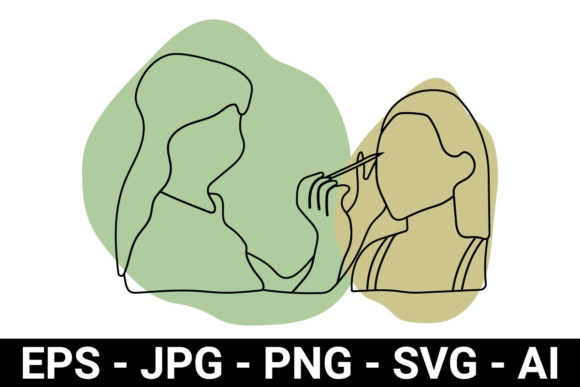
The core appeal of Makeup Artist Line Art for Design is its minimalist elegance. It captures the essence of a beautician holding a brush with a model nearby, relying on negative space and fluid lines rather than heavy shading. In the world of Illustrations, this approach is often safer for digitizing because it avoids the trap of trying to stitch gradients that machines struggle to replicate. The mood created is sophisticated and chic, making it an excellent candidate for branding materials or high-end handmade products.
However, line art presents specific challenges. If the lines are too thin, they may disappear against certain fabric textures. If they are too thick without proper fill, they can look like simple outlines rather than a cohesive image. As I reviewed the vector paths, I noted that the curves around the makeup brush and the facial features are smooth, which is promising for maintaining definition during stitching. The layout feels balanced, suggesting it would work well as a central motif on a tote bag or a chest logo on a sweatshirt.
Real-World Application: From Concept to Stitch
Imagine you are preparing a custom order for a local boutique owner who wants to launch a line of aprons for her makeup artists. She needs something that screams "professional" but remains durable enough for daily wear. This is where Makeup Artist Line Art for Design shines. Unlike complex photographic conversions that require thousands of stitches and long run times, this line art allows for faster production while maintaining clarity.
For a project like an embroidered patch, the distinct outlines of the design allow for crisp satin stitch borders that define the shape beautifully. If you were to use this on a canvas tote bag, the sturdy fabric provides a perfect backdrop for the linear details, ensuring the tote bag design stands out even after repeated washing. Similarly, on a cotton sweatshirt, the design offers a retro-modern vibe that appeals to younger demographics looking for unique custom apparel.
I also see great potential for holiday embroidery gifts. Picture a personalized pillow cover for a bride-to-be who is a makeup artist, featuring this design alongside her name. The simplicity of the Graphics ensures that the text remains legible and the image does not get lost in the texture of the pillow fabric. For Etsy sellers and craft business owners, this versatility means one file can generate multiple product listings, from baby clothes with a subtle version to bold statements on adult hoodies.
Navigating Fabric Challenges and Hoop Sizes
While the design is robust, there are scenarios where caution is required. If you attempt to stitch this on very thin or stretchy fabrics like jersey knit without the proper stabilizer, the tension could distort the delicate lines of the makeup brush or the model's face. Always test the design on scrap fabric first to ensure the hoop size accommodates the full width of the artwork without stretching the edges.
Textured fabrics like denim or wool blends can also interfere with fine details. On these surfaces, the stitch density might need to be increased slightly to ensure the lines do not sink into the weave. Conversely, on dark fabrics, the contrast becomes critical. You will likely need to use a white underlay or a light-colored thread color palette to make the black lines pop. Without sufficient contrast, the intricate details of the make up tools could blend into the background, diminishing the professional look of the finished product.
Design Integrity and Commercial Viability
For those selling finished items, the perception of quality is everything. A poorly executed embroidery job can ruin a brand's reputation. Makeup Artist Line Art for Design offers a level of professionalism that builds customer trust. When a client sees a clean, well-defined image on their personalized gift, they perceive higher value. This is crucial for small shop products where margins are tight, and repeat business depends on the perceived quality of the craftsmanship.
However, you must consider the limitations of the format. While the ZIP folder includes AI, EPS, SVG, JPG, and PNG files, remember that these are vector and raster graphics, not necessarily pre-digitized .PES or .DST files unless specified by the seller. If you are using a home machine, you will need to digitize the vector yourself or hire a professional. During this process, pay close attention to the corners and tiny lettering. Sharp angles in line art can sometimes cause thread breakage if the needle changes direction too abruptly. Adjusting the running stitch settings and ensuring adequate pull compensation will prevent puckering.
Practical Notes for the Embroidery Designer
Before committing to a large batch of orders, follow these steps to ensure success:
- Test on Scrap Fabric: Never skip the test run. Check how the fill stitch interacts with the outline and adjust the density if gaps appear.
- Verify Licensing: Ensure the license covers your intended use. Are you allowed to sell the finished embroidered patch or just use it for personal projects? Clarify this before listing items on Etsy or at craft fairs.
- Check Thread Contrast: Use printable mockups to visualize how the design looks on light versus dark backgrounds. Sometimes a two-tone thread scheme works better than solid black.
- Inspect Small Details: Zoom in on the brush bristles and facial features. If they are too small for your machine's capability, consider simplifying them slightly to maintain clarity.
- Stabilizer Selection: For commercial embroidery on varied garments, invest in high-quality cutaway stabilizers to support the weight of the thread and prevent distortion over time.
In conclusion, Makeup Artist Line Art for Design is a versatile asset for designers who understand the mechanics of embroidery. It is not a magic bullet that works perfectly on every surface without adjustment, but with the right preparation, it delivers a polished, professional result. Whether you are creating a single handmade product for a friend or scaling up for a boutique collection, this design offers the structural integrity needed for high-quality stitching. By respecting the limitations of the medium and testing thoroughly, you can turn these digital lines into a lasting piece of art that customers will love.